
If you’ve priced out a new laptop or a stick of memory lately and felt your stomach drop, you’re not imagining things. A lot of tektoc viewers have been asking the same question: why is RAM so expensive right now? The short answer is that your everyday PC parts are now competing with artificial intelligence for the same factory space, and right now, AI is winning.
Here’s what’s actually going on, and what it might mean for the next several years of buying a computer.
Why Is RAM So Expensive Right Now?
The story starts with comments from the CEO of Apacer, one of the world’s bigger makers of RAM modules and storage devices. He said that chip supply to companies like his could fall by more than 70 percent year over year. That’s not a typo, and it’s not because factories are making less memory overall.
What’s really happening is that giants like Samsung and SK Hynix are shifting their production toward high bandwidth memory, or HBM, which is the specialized memory that powers AI servers. Every wafer of silicon that goes into training a chatbot is a wafer that isn’t going into a laptop or a desktop sitting on a shelf. As one industry executive put it, the risk used to be overpaying for chips. Now the risk is not getting any at all. That’s the heart of the current RAM shortage: it’s a supply problem, not just a pricing one.
How Long Will the RAM Shortage Last?
This is the part that’s harder to hear, but it’s worth understanding so you can plan around it. New chip fabrication facilities are coming online in 2028 and 2029, but by most estimates, that new supply still won’t be enough to satisfy data center demand, let alone the retail market. Building a single new fab takes three to five years and several billion dollars, so there’s no quick fix waiting in the wings.
Based on the information available right now, a realistic estimate is four to five more years of tight supply and higher prices, and some industry voices, including the CEO of Adata, believe it could stretch a decade or more. Artificial intelligence isn’t a passing trend either. It’s already woven into self-driving vehicles, robotics, engineering, and resource exploration, so the demand pulling memory away from consumer devices isn’t likely to ease off anytime soon.
What Apple’s New Leasing Program Tells Us
Here’s where it gets interesting. In the same window that this RAM shortage story broke, Apple quietly launched something called Apple Upgrade in the United States, a monthly lease program that, for the first time, includes the Mac starting at $24.99 a month.
Do the math on that over three years and you’re looking at close to $900, and at the end of the term you own nothing unless you pay again. It’s easy to see the appeal of a Netflix-sized monthly payment, but it’s worth understanding what you’re actually getting: access, not ownership. For a company facing rising input costs on memory, a lease program also solves a supply problem of its own. The hardware comes back to Apple in two or three years, ready to be refurbished and sold or leased again, which builds a private supply chain that doesn’t depend entirely on a shrinking DRAM market.
None of this means anyone is doing anything underhanded. It’s simply smart business in a tough market. But if this approach spreads to Windows PCs too, it’s a trend worth watching with your eyes open.
What You Can Do About It
None of this is a reason to panic, and that’s really the point of walking through it together. A few practical, sensible steps can make a real difference. Hold on to the hardware you already have, keep it well maintained, and upgrade components where you still can. If you genuinely need a new PC or Mac within the next year and you’re in a position to buy outright, it may make sense to do that sooner rather than later, since prices may settle at a higher level than where they sit today. And if leasing programs do start showing up for Windows machines, just go in understanding exactly what you’re signing up for.
Tech is always changing, and the RAM shortage is simply the latest example of the industry adjusting to a new reality driven by AI demand. Staying informed is the best way to make confident decisions, without needing a computer science degree to do it.
Make sure to check out the video at the top of this post to get the full story.
👇 Current Value-Focused Memory and Storage Options
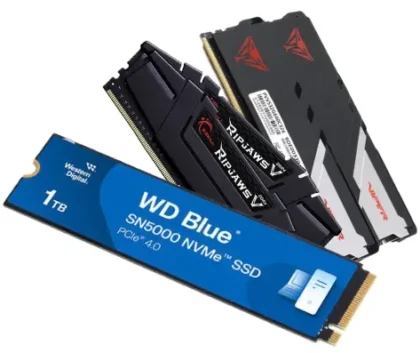
It’s tough out there – here are the memory and storage options I’ve used here at tektoc that represent a good balance between affordability, performance and durability.
DDR4 Memory: G. Skill Ripjaws V Series – https://amzn.to/4woA5UL
DDR5 Memory: Patriot Viper Venom Series – https://amzn.to/3RPLn6B
Storage: Western Digital Blue SSDs and HDDs – https://amzn.to/4ga6ad8
As an Amazon Associate I earn from qualifying purchases, which does not affect the price you pay. Thanks for supporting the site!
Discover more from tektoc
Subscribe to get the latest posts sent to your email.